Skip to content


I did not realise a hand blender could teach me so much until I broke two of them. One stopped working while blending soup, and the other struggled through a thick chutney before giving up completely. That is when I understood that buying a hand blender is not just about wattage, price or a sleek design. It is about knowing what the appliance can actually handle, what you should never use it for, and which small details make it last longer in a busy kitchen.
The Blender Broke. Twice. That Was My Reality Check
My first hand blender stopped working while blending hot soup. The second one gave up during what I thought was a simple chutney attempt. At that point, I realised the problem was not just the product. It was also how I was choosing and using it.
I was treating a hand blender like it could do everything. Smoothies? Yes. Soup? Yes. Thick chutney? Also yes. Dry masala? Maybe and that was my big mistake.
That is also when I started understanding why people compare food chopper vs food processor, and why every small appliance has a job of its own. A hand blender is not a mini mixer grinder. A chopper is not a food processor. And a food processor is not something you pull out for two garlic cloves.
Mistake 1: I Only Looked at Wattage
Earlier, I thought higher wattage meant better performance. But wattage alone does not tell you how comfortable, durable or practical a hand blender will be.
Now, I check:
-
Whether the motor feels stable during use
-
Whether the blade is sharp enough for soft blending
-
Whether the stem is strong and easy to clean
-
Whether the grip is comfortable for longer use
-
Whether the appliance is meant for my actual cooking style
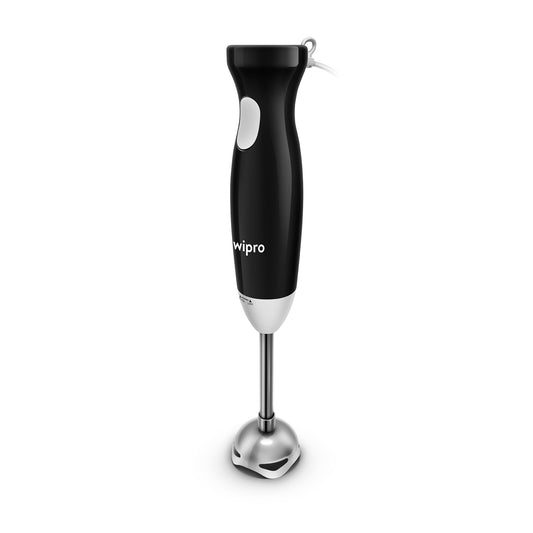
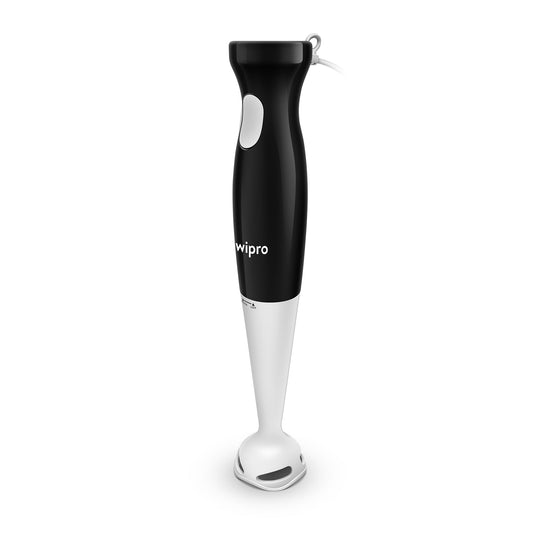
For example, Wipro Appliances has models like the FB101 Hand Blender 300 Watt with a plastic stem and the FB102 Hand Blender 300 Watt with a food-grade stainless steel stem. Both are positioned for everyday blending, whipping, churning and whisking. That is the kind of clarity I now look for before buying any hand blender.
Mistake 2: I Used It for the Wrong Jobs
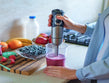
A hand blender is excellent when the food has some liquid or softness. It works well for soups, buttermilk, smoothies, sauces, baby food, cake batter and light whipping.
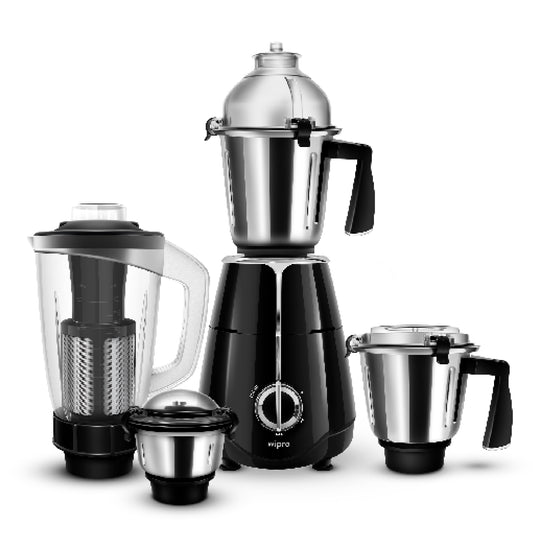
But I learned not to force it into jobs it is not built for. A hand blender works beautifully for soft, liquid-based tasks like tomato soup, buttermilk, lassi, smoothies and light purees. For garlic, chillies, coriander or small tadka prep, a food chopper is far more useful. If I am making salad for many people or grating carrots and beetroot, a food processor saves more time and effort. Fo r dry spice grinding, I still rely on a mixer grinder. And for thick coconut chutney, I choose between a mixer grinder and a chopper depending on the quantity.
So, what is the difference between a food chopper and food processor? In simple words, a chopper is for quick, small-batch cutting, while a food processor is for bigger, more versatile prep.
Mistake 3: I Ignored the Stem Material
This matters more than I expected. A plastic stem can work well for basic use, especially if you mostly blend room-temperature ingredients. But if you often blend hot soups, sauces or dals, a stainless steel stem feels more reassuring.
After my first blender incident, I became more careful with heat. I do not directly put the blender into boiling liquid anymore. I let soups or dals cool slightly, use a deeper vessel and keep the blade fully inside the food before switching it on. This small habit reduces splashing and makes blending smoother.
Mistake 4: I Didn’t Think About Cleaning
A hand blender should be easy to clean because you will use it more often only if cleaning is not irritating. My tested rule is simple: clean it immediately.
Do this after every use:
-
Unplug it first.
-
Rinse the blade area under running water.
-
Use mild dishwashing liquid for oily mixtures.
-
Do not dip the motor body in water.
-
Wipe the handle with a damp cloth.
-
Dry the stem before storing.
If cleaning feels like a big task, the appliance slowly moves to the back of the cabinet. This is true for most kitchen appliances, not just hand blenders.
Mistake 5: I Bought Without Thinking About My Cooking Pattern
Now I ask myself one question before buying: “What will I actually use this for every week?” If your everyday cooking includes soups, smoothies, lassi, dal blending, pancake batter or baby food, a hand blender makes complete sense. If you do a lot of chopping for tadka, poha, sabzi or chutney bases, then the food chopper vs food processor decision becomes more relevant.
For small families, a chopper can be enough for quick chopping. For larger families or batch cooking, a food processor saves more time. If you bake, knead dough, grate vegetables or prep salads often, the food processor earns its space.
My Practical Hand Blender Buying Checklist
Before buying again, I now check these things:
-
Purpose: Will I blend liquids, whip, churn or make purees?
-
Stem: Plastic or stainless steel, based on my cooking style.
-
Blade: Strong enough for smooth blending.
-
Grip: Easy to hold without slipping.
-
Noise: Lower noise is better for daily use.
-
Storage: Compact enough for my kitchen.
-
Cleaning: Simple stem and blade cleaning.
-
Brand support: Easy access to product details and service information.
This is why referring to the Wipro Appliances website helps. You can compare hand blenders along with other home appliances like mixer grinders, electric kettles, choppers and food processors in one place instead of guessing from random product images.
A Small Lesson from Two Broken Blenders
A hand blender is one of those appliances you start appreciating only when it fits your routine. It is not meant to replace every appliance in the kitchen. It is meant to make everyday blending faster, cleaner and less tiring.
After two broken hand blenders, I finally stopped asking, “Which one is cheapest?” and started asking, “Which one suits the way I cook?” That one question makes the purchase much smarter.