Skip to content


How much electricity does an induction cooktop use?
A typical induction cooktop ranges between 1200W and 2100W. A 2000W induction cooktop consumes approximately 2 kWh of electricity per hour at full power. However, since most cooking happens for shorter durations and at lower heat levels, the average electricity usage per meal is around 1–1.5 kWh.
Induction cooktops have revolutionized modern cooking with their blend of speed, precision, and efficiency. In an era when energy use and sustainability matter more than ever, understanding the power consumption of induction cooktops is essential for homeowners and environmental advocates alike.
In this blog, we explore how induction cooking works, what factors influence efficiency, and why it outperforms traditional methods. Towards the end, we also look at an option: the Wipro Induction Cooktop, along with features that enhance performance and style.
How an Induction Cooktop Works?
An induction cooktop uses electromagnetic fields to heat cookware directly rather than relying on an open flame or electric coils.
When the cooktop is turned on, the magnetic field generates heat directly in the pan, and almost no energy is wasted heating the cooktop surface itself.
This results in more efficient cooking, better temperature control, and lower wasted energy. As a result, the induction stove power consumption is often substantially lower than traditional cooking methods.
How Efficient Are Induction Cooktops?
Induction cooking is known for its high efficiency. Approximately 85–90% of the energy is transferred directly to the cookware. In comparison, gas stoves typically operate at around 40% efficiency, while electric coil stoves reach approximately 60% efficiency.
This higher energy transfer leads to less heat loss, shorter cooking times, and a cooler kitchen environment. As a result, the electric consumption of induction cookers is typically lower in real cooking situations.
Power Consumption of an Induction Cooktop
Most induction stoves are rated between 1200W and 2100W.
A standard 2000W induction cooktop uses approximately 2 kWh of electricity per hour when operating at full power. However, actual electricity usage is usually lower during normal cooking.
Typical cooking electricity usage example:
-
Full-power cooking for 15–20 minutes: approximately 0.5–0.7 kWh
-
Simmering or lower-heat cooking for another 20 minutes: approximately 0.3–0.5 kWh
-
A typical meal may therefore consume about 1–1.5 kWh of electricity
This makes induction cooking both quick and economical.
Factors That Affect Electricity Usage:
Electric consumption of induction stoves may vary depending on several factors.
-
Wattage Setting: Higher power provides faster cooking but increases electricity use. Medium or low settings improve efficiency.
-
Cooking Style: Rapid boiling followed by simmering can significantly reduce overall energy consumption.
-
Cookware Compatibility: Magnetic cookware with flat bottoms maximizes heat transfer and reduces energy loss.
-
Built-in Smart Features: Timers, temperature controls, and auto-shutoff help prevent unnecessary electricity usage.
-
Kitchen Habits: Preparing ingredients in advance, using lids, and keeping the cooktop clean to help maintain efficient performance.
Comparing Induction Electricity Use
Comparison of common cooking methods:
|
Cooking Method |
Heat Efficiency |
Speed |
Safety |
Energy Use |
|
Gas Stove |
~40% |
Medium |
Moderate |
High (energy wasted) |
|
Electric Coil Stove |
~60% |
Slower |
Low |
Medium |
|
Induction Cooktop |
~85–90% |
Very Fast |
High |
Low to Medium (best use-case) |
When comparing the overall power consumption of an induction cooktop, faster cooking times and improved energy transfer make induction stovea strong option for energy-conscious kitchens.
Induction Cooktop Benefits Beyond Energy Savings
While electricity usage is important, induction cooking also offers several other advantages.
-
Speed and Precision: Induction cooktops reach target temperatures quickly and maintain stable heat levels.
-
Safety: There is no open flame and the surface cools down quickly once cookware is removed.
-
Cleanliness: Smooth glass surfaces make spills easy to wipe clean.
-
Environmental Impact: Induction cooking uses electricity efficiently and can become even cleaner when powered by renewable energy sources.
Tips to Reduce Induction Cooktop Electricity Consumption
-
Use lids to reduce cooking time and prevent heat loss.
-
Match cookware size to the heating zone.
-
Prepare and measure ingredients before cooking.
-
Use medium heat settings instead of full power whenever possible.
-
Use preset functions and smart sensors available on the cooktop.
-
Keep the cooktop surface clean to maintain efficient heat transfer.
Why Wipro Induction Cooktop is a Smart Energy-Saving Choice
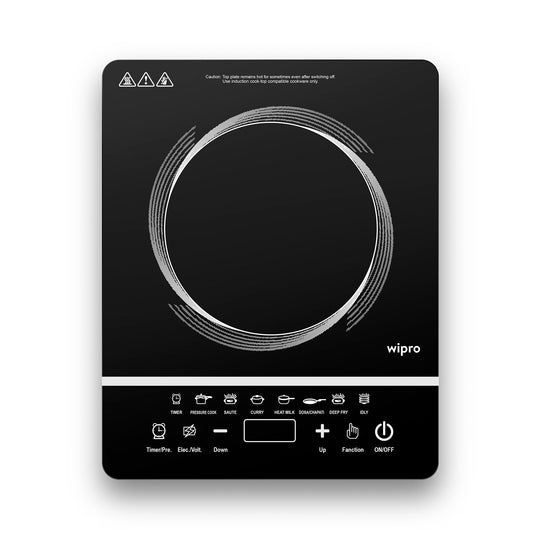
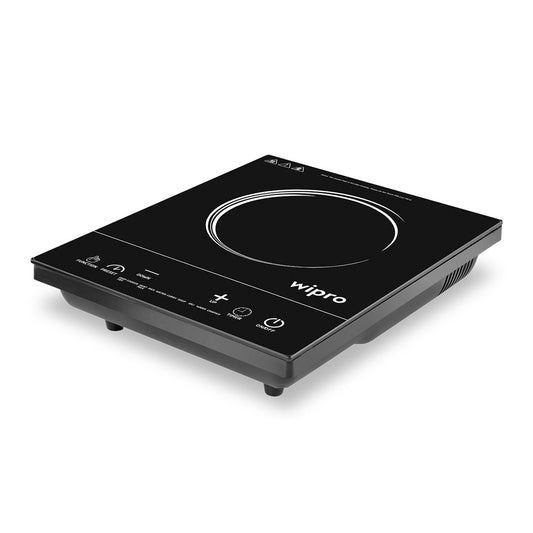
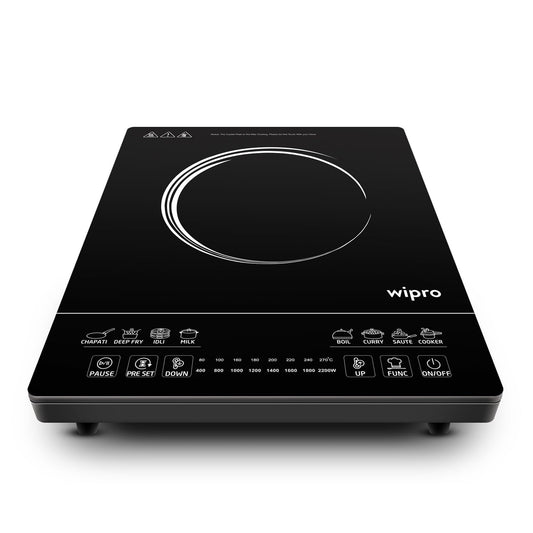
The Wipro Induction Cooktop offers a balance of efficiency, performance, and modern design.
Key features include:
-
Smart Sensor Touch Control for an easy and modern interface
-
Crystal Glass Plate that enhances durability and simplifies cleaning
-
2000W Power Output for fast cooking performance
-
Precision Temperature Control for accurate heat adjustments
-
Seven Indian Cooking Presets designed for commonly prepared dishes
-
Corded Electric Power Source for consistent power delivery
-
Durable glass material with a sleek design
This model combines fast heating, smart controls, and easy maintenance, while helping keep electricity usage low.
Conclusion:
Induction cooktops offer an energy-efficient, fast, and safe alternative to traditional cooking methods. Their high energy transfer and smart features help reduce electricity usage while improving cooking performance.
For households looking to upgrade their kitchens without increasing electricity consumption, Wipro Induction Cooktop offers a modern solution that combines speed, savings, and convenience.
Explore more about the benefits of an induction cooktop to discover how it can make every day cooking faster, safer, and more energy efficient.
FAQs
-
Is a 2000W induction cooktop expensive to run?
A 2000W induction cooktop consumes about 2 kWh of electricity per hour at full power. However, most cooking does not require full power continuously. In typical cooking situations, the electricity consumption per meal is around 1–1.5 kWh, making it relatively economical for everyday cooking.
-
Does induction cooking consume more electricity than a gas stove?
No. Induction stoves are generally more energy-efficient than gas stoves. Induction cooking transfers about 85–90% of energy directly to the cookware, while gas stoves operate at roughly 40% efficiency, meaning a larger portion of energy is lost as heat.
-
Why does an induction cooktop heat food faster?
Induction cooktops heat cookware directly using Electromagnetic Induction instead of heating a burner first. Because heat is generated directly inside the cookware, the cooking temperature rises faster, reducing cooking time and overall energy use.
-
Does cookware type affect induction cooktop electricity consumption?
Yes. Induction cooktops require magnetic cookware to function efficiently. Flat-bottom cookware that fits the heating zone helps maximize heat transfer, which improves efficiency and minimizes electricity consumption.
-
Do induction cooktops waste electricity when not in use?
No. Induction cooktops do not waste electricity when they are not in use. They only generate heat when a compatible pan is placed on the cooktop. Once the pan is removed, the heating stops automatically, which helps prevent unnecessary electricity use.