Skip to content


Making French macarons at home becomes easier when you focus on three things: a stable meringue, properly folded batter, and controlled baking. This beginner-friendly recipe takes you through each stage, from sifting and piping to baking crisp shells and adding your favourite filling.
French macarons may look delicate, but their basic recipe is surprisingly simple. Almond flour and sugar form the shell, whipped egg whites provide structure, and a creamy filling brings everything together.
Many people looking for a recipe for macaroon biscuits actually look for French macarons: the smooth, colourful sandwich cookies made with almond flour and meringue. Once you understand the key stages, learning how to make macarons at home becomes much more manageable.
Macaron Recipe: Ingredients You Will Need
For around 20 assembled macarons, keep these ingredients ready:
-
1¾ cups powdered sugar
-
1 cup almond flour
-
3 large egg whites
-
¼ cup granulated sugar
-
Gel food colouring, optional
-
Ganache, buttercream or jam for the filling
You will also need a fine-mesh sieve, mixing bowl, silicone spatula, piping bag and baking tray lined with parchment paper or a silicone baking mat.
How Do You Make Macarons Step by Step?
The technique matters as much as the ingredients. Follow each stage carefully rather than rushing the process.
1. Sift the Dry Ingredients
Sift the almond flour and powdered sugar together into a bowl. Breaking up lumps at this stage helps make macaron shells smoother.
For an even finer mixture, pass the ingredients through the sieve more than once.
2. Whip the Egg Whites
Place the egg whites in a completely clean and dry bowl. Begin whipping until they become frothy.
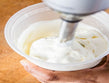
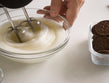
Gradually add the granulated sugar while continuing to whisk. Keep whipping until the meringue becomes glossy and forms stiff peaks. Add a small amount of gel food colouring at this point if you want coloured shells.
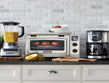
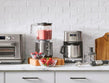
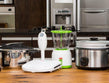
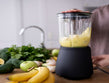
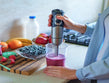
A whisk attachment can make this stage easier. The Wipro Hand Blender is designed for functions including whipping and whisking, making it useful for preparation tasks where a light, aerated mixture is required.
3. Fold the Batter Carefully
Add the sifted dry ingredients to the meringue in batches.
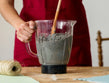
Fold gently with a silicone spatula until the batter becomes smooth and flows slowly from the spatula. A useful consistency check is to form a figure eight with the falling batter. It should flow continuously without appearing watery.
Overmixing can leave the batter too loose, while undermixing may produce uneven or peaked shells.
4. Pipe the Macaron Shells
Transfer the mixture into a piping bag fitted with a round nozzle.
Pipe even circles onto the lined baking tray, leaving a little space between each one. Tap the tray gently against the counter to bring trapped air bubbles to the surface. Visible bubbles can be popped carefully with a toothpick.
5. Let the Shells Rest
Leave the piped macarons at room temperature for around 30 minutes or until the tops develop a dry surface.
Touch one lightly with a fingertip. The batter should not stick to your finger when the shells are ready to bake.
How to Make Macarons at Home in an OTG
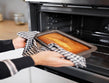
Preheat the OTG to 150°C, then place the tray inside and bake for approximately 12–15 minutes, following the method in the original recipe.
For home bakers, temperature consistency is particularly important because macaron shells need enough controlled heat to set while developing their characteristic raised "feet."
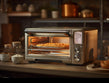
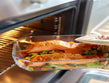
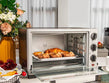
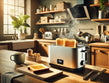
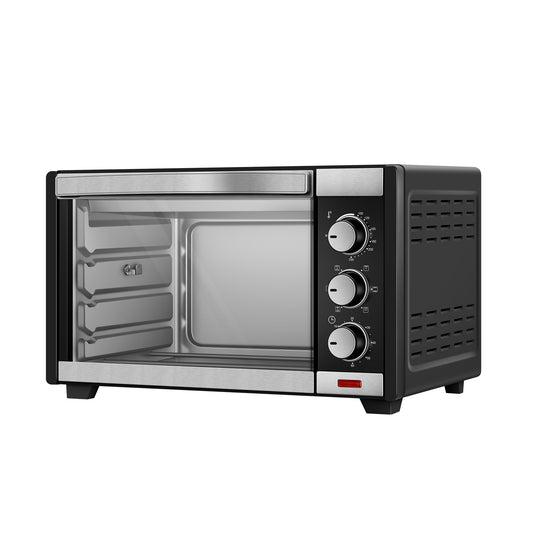
The Wipro Vesta 28L Oven Toast Grill has a 1600W heating element, six-stage heating and Wipro's Opti-Even technology for distributing heat throughout the chamber. Its chamber light also lets you monitor baking without repeatedly opening the door.
Once baked, allow the shells to cool completely before lifting them from the baking sheet.
Fill and Assemble Your Macarons
Match shells of similar sizes.
Pipe a small amount of buttercream, chocolate ganache or jam onto the flat side of one shell. Place another shell on top and press very gently until the filling reaches the edges.
You can experiment with fillings such as:
-
Chocolate ganache
-
Vanilla buttercream
-
Coffee buttercream
-
Fruit jam
-
Lemon or citrus-flavoured cream
For the neatest finish, avoid adding so much filling that it spills from the sides.
Beginner Tips for Better Macarons
When learning how to make macarons at home, consistency usually improves with practice. Keep these basics in mind:
-
Measure ingredients carefully.
-
Use a clean, dry bowl for whipping egg whites.
-
Sift almond flour thoroughly.
-
Avoid aggressively folding the batter.
-
Pipe shells as evenly as possible.
-
Let the shells develop a dry surface before baking.
-
Preheat the OTG before placing the tray inside.
-
Allow the macarons to cool before removing them.
Making Macarons Gets Easier with Practice
A good beginner macaron recipe is less about complicated ingredients and more about getting each small step right. From whipping the meringue to judging the batter consistency and controlling oven temperature, precision makes the biggest difference.
How do You Make Macarons Successfully at Home?
Work patiently, measure carefully and avoid skipping the resting stage. Once the basic shell becomes familiar, you can start experimenting with colours, flavours and fillings of your own.
FAQ
-
What is the difference between macarons and macaroons?
Macarons are almond-flour sandwich cookies, while macaroons are typically coconut-based treats.
-
How long should macarons rest before baking?
Let piped shells rest for about 30 minutes or until the surface feels dry.
-
At what temperature should macarons be baked?
This recipe uses a preheated OTG at 150°C for approximately 12–15 minutes.
-
Why do macarons crack while baking?
Cracking can happen when trapped air remains in the batter, or the shells have not rested sufficiently.
-
Can beginners make macarons at home?
Yes. Careful measuring, proper meringue consistency and controlled baking make the process easier to learn.